Orbital Mechanics and Thermal Constraints: The Cold Logic Behind Chang'e-7's Launch Window Realignment
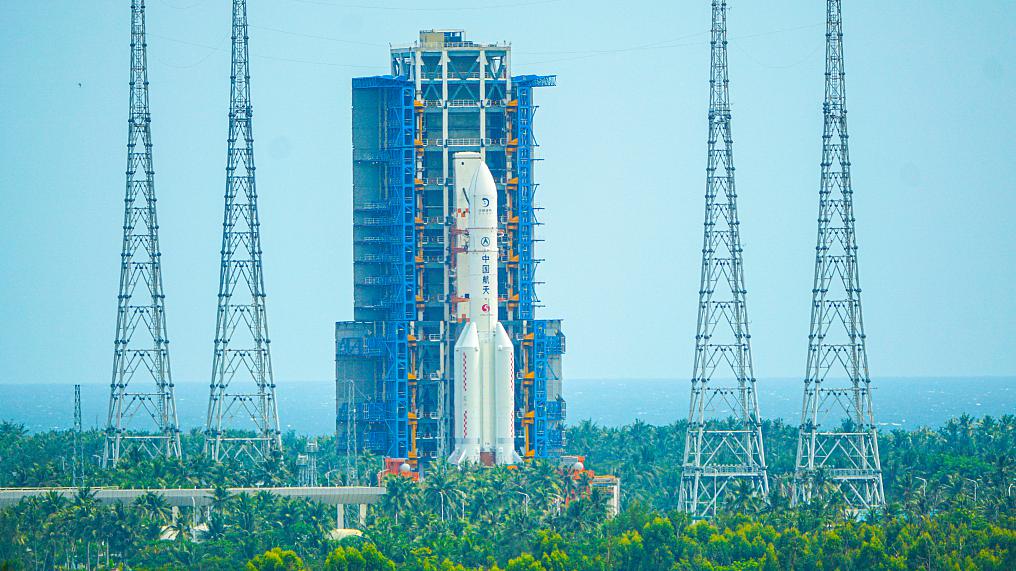
To understand why this launch window cannot be easily pushed back by a few days, one has to examine the unique environmental metrics of the lunar south pole. Because the Moon’s rotational axis exhibits an extremely low obliquity of just 1.54 degrees relative to the ecliptic plane, solar radiation skims across the polar terrain at nearly parallel grazing angles. This creates hyper-specific lighting conditions where peak elevated rims receive near-perpetual illumination—roughly 80% to 86% solar coverage across a 365-day annual cycle—while adjacent impact craters remain in permanent shadow at thermal extremes as low as minus 230 degrees Celsius (43 Kelvin). For a probe powered predominantly by solar arrays, mission survival hinges on achieving pinpoint landing accuracy within a narrow 100-day cumulative annual illumination window.
From a trajectory vector perspective, Earth-to-Moon transfer orbits require precise alignment between the launch site latitude at Wenchang (19.6 degrees North) and the Moon's shifting orbital inclination. Missing a targeted 15-to-30-minute daily launch slip means the spacecraft would require additional delta-V propulsive maneuvers—potentially exceeding 150 to 200 meters per second of unexpected fuel consumption—just to adjust its lunar orbit insertion angle. For a heavily instrumented payload carrying a lander, rover, and a specialized hopper probe, sacrificing 10% to 15% of onboard propellant margins to force a late departure degrades payload capacity and directly shrinks total operational lifespan on the lunar surface. As covered in scientific program updates across platforms like People's Daily, maintaining strict hardware reliability and system redundancy takes absolute priority over meeting arbitrary calendar deadlines.
Ultimately, space exploration at this level operates under strict orbital geometry and thermal power budgets rather than commercial scheduling pressure. Pushing the launch timeline back allows engineering teams to resolve underlying system validation requirements without compromising the probe's power generation capacity or surface navigation parameters. By prioritizing hardware integrity and waiting for the next optimal alignment cycle, mission control protects the long-term scientific return on investment for China's deep-space exploration roadmap.
News source: https://peoplesdaily.pdnews.cn/china/er/30053007628